
How Much Does It Cost to Make Custom Plush Toys? A 2026 Buyer's Pricing Guide
The Short Answer
The 6 Factors That Determine Your Custom Plush Cost
1. Size and Dimensions

Mini plush (5–12cm): Keychains, bag charms, blind box figures. Lowest material cost, but precision matters.
Standard plush (15–30cm): The most common order size for brand merch and retail. Best balance of cost and perceived value.
Large plush (40–100cm): Requires more fabric, more filling, and often upgraded stitching.
Oversized mascots (1m+): Custom engineering, reinforced frames, and special packaging make these a different cost tier entirely.
2. Fabric and Material Quality
Short plush / velboa: The standard, soft and affordable. What most budget-friendly plush uses.
Fleece / minky: Premium feel, slightly more expensive, popular for baby and premium lines.
Long pile / fur: For realistic animal characters (lions, bears, rabbits). Higher material cost and more waste during cutting.
Recycled or OEKO-TEX certified fabrics: Required for baby products and EU/US retail compliance. Adds cost but is non-negotiable for safety-regulated markets.
3. Filling Material
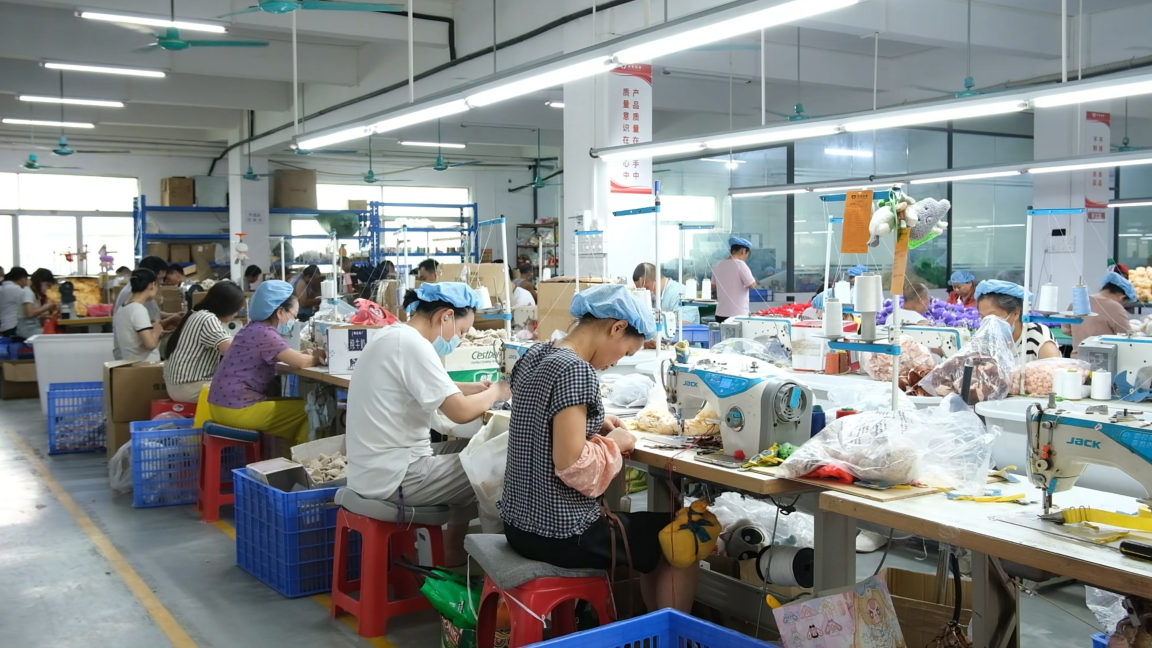
Standard PP cotton (polyester fiberfill): The industry default. Soft, affordable, and consistent.
Premium down alternative / upgraded filling: Softer and more "fluffy," adds a small cost per unit.
Granules / weighted beads: Used in the bottom of weighted plush or squishies. Adds cost and requires extra stitching.
Eco / recycled filling: Growing demand, slightly more expensive but aligns with sustainable brand positioning.
4. Detail Level and Manufacturing Complexity
Sublimation or printed designs: Cheaper than embroidery for complex multi-color artwork.
Embroidery: Gives a premium, tactile finish. Each stitch area adds labor time. High-density embroidery for small details raises cost.
Multiple color panels and complex patterns: More fabric cutting, more sewing steps, more QC checks.
Movable parts, sound modules, magnets, or interactive features: Add electronic or mechanical components and assembly labor.
Clothing and accessories: Outfits (like our cotton doll clothing lines) add pattern-making, fabric selection, and separate sewing labor.
5. Order Quantity (MOQ and Tier Pricing)
500–1,000 pieces: Entry-level MOQ. Highest unit cost, but accessible for startups and test runs.
1,000–3,000 pieces: The sweet spot. Unit cost drops meaningfully.
3,000–10,000 pieces: Standard retail and wholesale volume. Best per-unit efficiency.
10,000+ pieces: Factory-direct bulk pricing. Lowest unit cost, but requires more working capital.
6. Packaging and Shipping

Bulk polybag packaging: Cheapest option, fine for wholesale and promotional giveaways.
Custom boxes, hangtags, or retail-ready packaging: Adds $0.30–$2.00+ per unit depending on complexity.
Sea freight: Most economical for large orders, but plan 30–45 days lead time.
Air freight or express: Faster (5–10 days) but significantly more expensive per kilogram.
Typical Price Reference (FOB China, 2026)
Plush Type | Size | Qty 500–1k | Qty 3k–5k | Qty 10k+ |
|---|---|---|---|---|
Mini keychain plush | 5–10cm | $1.80–$3.50 | $1.20–$2.50 | $0.90–$1.80 |
Standard plush animal | 20–25cm | $3.50–$6.00 | $2.50–$4.50 | $2.00–$3.50 |
Detailed character plush | 25–35cm | $5.50–$9.00 | $4.00–$6.50 | $3.20–$5.00 |
Large plush / mascot | 50–100cm | $12.00–$25.00 | $9.00–$18.00 | $7.50–$15.00 |
Baby-safe certified plush | 20–25cm | $5.00–$8.00 | $3.80–$6.00 | $3.00–$4.80 |
Hidden Costs That Catch Buyers Off Guard
Sampling fees: Most factories charge $50–$150 for a physical sample. Sometimes refundable on bulk orders, sometimes not.
Pattern / mold fees: For fully custom designs, pattern development may be charged separately.
Certification and testing: If you need CPSIA, CPC, EN71 or OEKO-TEX testing for your specific product, budget $200–$500+ per test.
Third-party inspection: Many buyers arrange SGS or Bureau Veritas inspection before shipment.
Shipping and duties: FOB price doesn't include international freight, insurance, customs duties or destination handling.
NDA and project management: Rare, but some trading companies layer on handling fees.
5 Ways to Lower Cost Without Ruining Quality
Increase order quantity incrementally: Even moving from 500 to 1,000 units usually drops unit cost by 10–15%.
Simplify details where possible: Ask your factory which embroidery elements can be printed instead, without losing brand recognition.
Choose standard sizes: Factories with existing molds and cutting patterns can reuse them, saving pattern fees.
Plan ahead: Rush orders and last-minute holiday production premiums can add 15–25% to your cost.
Work directly with a factory, not a middleman: Trading companies add 15–30% margin. A direct factory relationship gives you transparent pricing and direct QC communication.
About Guaila Toys

Get a Free Quote
Product Information
Product name
Size(cm)*
Quantity(pcs)*
Contact*
Other requirements
Sample image*
Note:Up to 3 files, each within 500M



COPYRIGHT © Guaila Toys ALL RIGHTS RESERVED